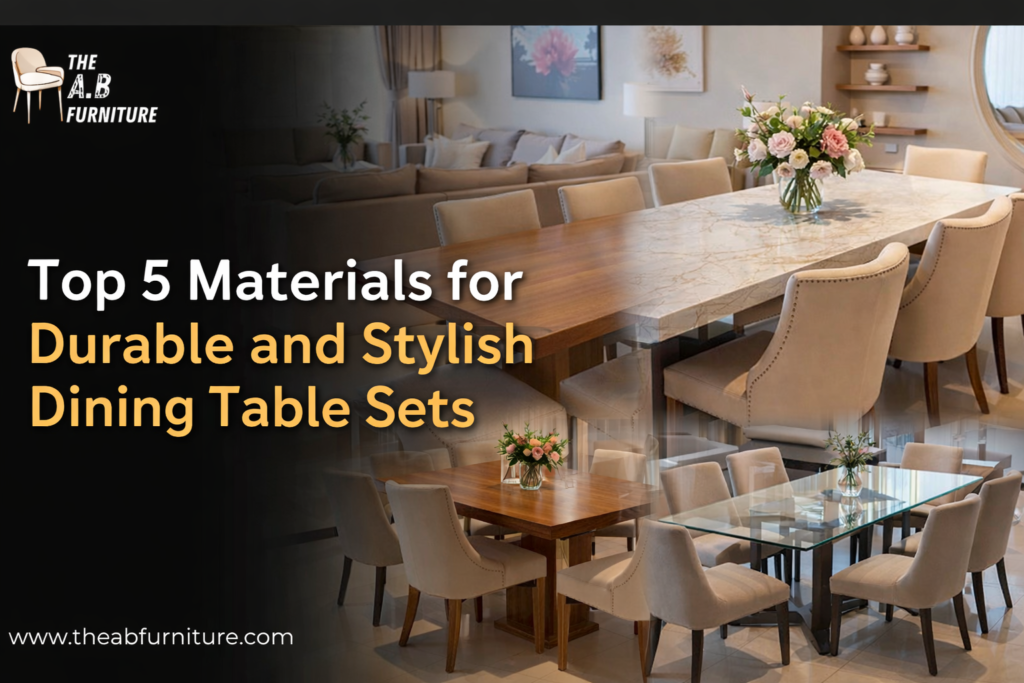
Choosing the perfect dining table set is more than just picking something that looks good—it’s about finding a balance between durability, functionality, and style. Your dining table is one of the most frequently used pieces of furniture in your home, exposed to spills, heat, scratches, and daily wear. That’s why selecting the right material is essential for long-term satisfaction.
In this comprehensive guide, we’ll explore the top 5 materials for durable and stylish dining table sets, along with their advantages, disadvantages, and ideal use cases.
Before diving into specific materials, it’s important to understand why your choice matters.
The material of a dining table affects:
Solid hardwood and stone materials are often considered the most durable, while glass and engineered options offer modern appeal with varying levels of resilience .
Why Choose Solid Wood?
Solid wood is widely regarded as the gold standard for dining tables. Materials like oak, walnut, teak, and maple offer unmatched strength and natural beauty.
Key Benefits
Solid hardwood tables can last for generations with proper care and resist everyday wear like dents and scratches .
Drawbacks
Best For
Why Choose Marble or Stone?
Stone dining tables—including marble, granite, and quartz—are known for their luxurious appearance and impressive durability.
Key Benefits
Quartz and ceramic surfaces are particularly resistant to scratches, stains, and heat, making them ideal for busy households .
Drawbacks
Best For
Why Choose Glass?
Glass dining tables are perfect for creating a sleek, contemporary look. They make spaces feel open and airy, especially in smaller rooms.
Key Benefits
Tempered glass is commonly used for safety and durability, offering resistance to breakage and heat .
Drawbacks
Best For
4. Metal: Industrial Strength and Contemporary Style
Why Choose Metal?
Metal dining tables or metal-framed designs bring a bold, industrial vibe while offering excellent durability.
Key Benefits
Metal materials like stainless steel and iron are highly durable and can withstand heavy use without damage .
Drawbacks
Best For
5. Engineered Wood: Affordable and Versatile
Why Choose Engineered Wood?
Engineered wood (like MDF or plywood with veneer) is a budget-friendly alternative to solid wood.
Key Benefits
High-quality engineered wood offers decent durability and consistent appearance, making it a practical option for many households .
Drawbacks
Best For
| Material | Durability | Maintenance | Style Appeal | Cost Level |
| Solid Wood | High | Medium | Warm & timeless | High |
| Marble/Stone | Very High | Medium-High | Luxurious | High |
| Glass | Medium | High | Modern & sleek | Medium |
| Metal | High | Low | Industrial | Medium |
| Engineered Wood | Medium | Low-Medium | Versatile | Low |
1. Consider Your Lifestyle
If you have kids or frequently host guests, opt for durable materials like wood or stone that can handle heavy use.
2. Think About Maintenance
3. Match Your Interior Style
4. Evaluate Your Budget
Engineered wood offers affordability, while hardwood and stone are premium investments.
Regardless of the material, proper care can significantly extend your table’s lifespan:
Simple habits like these help maintain both durability and appearance over time .
Selecting the right material for your dining table set is a crucial decision that impacts both style and functionality.
Ultimately, there’s no single “best” material—it all depends on your lifestyle, budget, and design preferences. By understanding the strengths and limitations of each option, you can confidently invest in a dining table set that will remain stylish and durable for years to come.