
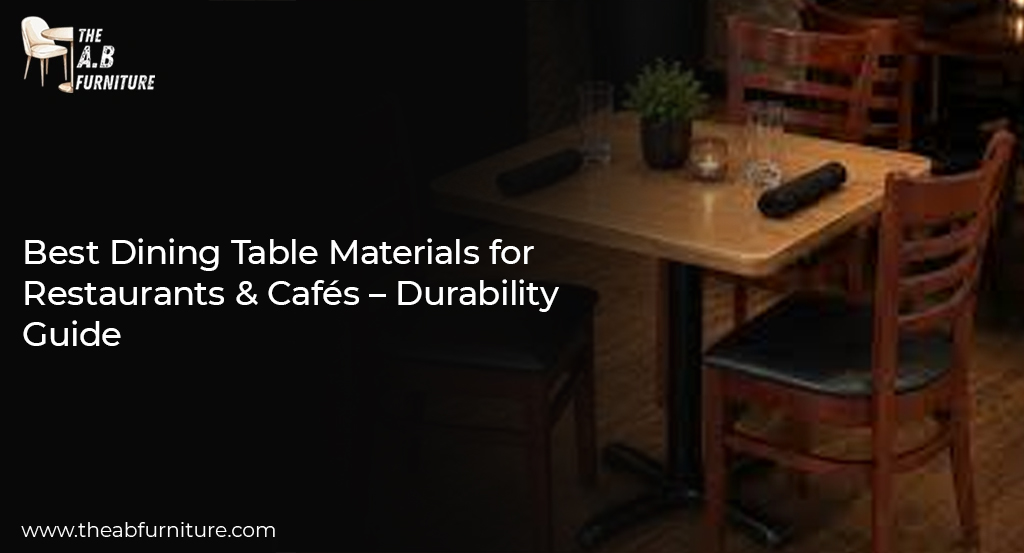
Choosing the wrong material for your restaurant’s dining tables is one of the most expensive mistakes an owner can make. A table that looks great in a showroom can start chipping, staining, or wobbling within months once it’s exposed to daily spills, heavy trays, and constant wiping down. If you’re furnishing a restaurant, café, hotel, or any high-traffic commercial space, this guide breaks down exactly which materials hold up and which ones quietly cost you more in replacements than they saved you upfront.
A dining table at home might get used a few hours a day. In a restaurant or café, the same table can be in near-constant use for 10–12 hours, seating multiple groups, absorbing spills, and taking impact from cutlery, hot plates, and cleaning chemicals every single day. That difference in wear is exactly why residential-grade furniture rarely survives long in a commercial setting.
When you’re sourcing commercial dining tables, durability isn’t a nice-to-have it’s the entire point. A table that needs replacing every 18 months isn’t actually cheaper than one that costs more upfront and lasts a decade.
Before comparing specific materials, it helps to know what you’re actually testing for:
With those factors in mind, here’s how the most common materials for restaurant and café dining tables actually compare.
Solid wood remains one of the most popular choices for restaurants that want a warm, upscale feel. Hardwoods like Sheesham are especially well suited to commercial use because of their natural density and resistance to everyday wear.
For restaurants and cafés going for a timeless, high-end look, solid wood, particularly Sheesham with a durable top finish, is consistently one of the strongest long-term investments in dining furniture.
Marble brings an unmistakably premium look to any dining space, which is exactly why so many upscale restaurants and hotel lobbies use it. But its performance in a high-traffic setting depends heavily on how it’s finished.
Strengths:
Watch out for:
A practical middle ground many commercial buyers choose is an artificial marble finish over a solid base it delivers the marble aesthetic with better resistance to daily wear and a lower price point than natural stone.
For restaurants and cafés that prioritize budget and easy maintenance without sacrificing durability, laminate and PVC-top tables are hard to beat.
Strengths:
Watch out for:
This is often the go-to option for cafés and casual dining spots that need consistent performance across a large number of tables without a heavy budget.
Glass tables are less common in high-traffic restaurants, but they do show up in specific settings modern cafés, hotel lounges, and upscale bars.
Strengths:
Watch out for:
Glass works best as an accent piece rather than the primary material across an entire restaurant floor.
| Material | Durability | Maintenance | Best For |
| Solid Wood (Sheesham) | High | Moderate | Upscale restaurants, cafés |
| Marble / Artificial Marble | High (heat), Moderate (stains) | Moderate | Hotels, feature tables |
| Laminate / PVC Top | High | Low | High-volume cafés, casual dining |
| Glass | Moderate | High | Accent tables, modern lounges |
There isn’t a single “best” material for every restaurant; the right choice depends on your specific environment:
Based on years of manufacturing dining tables for both residential and commercial clients, one pattern comes up consistently: businesses that mix materials — for example, durable PVC-top tables for the main floor and a few marble feature tables near the entrance — tend to get the best combination of cost control and visual appeal.
The right material for your restaurant, café, or hotel’s dining tables comes down to matching durability requirements with your specific environment and budget. Solid wood and marble bring a premium feel with strong durability when properly finished, while laminate and PVC-top tables offer the best value for high-volume commercial spaces. Whatever direction you choose, prioritize long-term durability over short-term savings your furniture is one of the first things guests interact with, and it should hold up to the pace of your business.
If you’re furnishing a restaurant, café, or commercial space, explore our range of manufacturer-direct dining tables built with commercial-grade materials designed to last.
Frequently Asked Questions
Q1: What is the most durable material for restaurant dining tables?
Solid wood with a proper protective finish and laminate or PVC-top tables are generally the most durable options for high-traffic restaurant use, offering strong resistance to scratches, stains, and daily wear.
Q2: Are marble dining tables good for restaurants?
Yes, marble and artificial marble tables are excellent for restaurants and hotels that want a premium look, especially since marble is naturally heat-resistant. However, natural marble needs proper sealing to prevent staining.
Q3: Is glass a good material for commercial dining tables?
Glass works best as an accent or feature table rather than for high-traffic main dining areas, since it scratches more easily and shows smudges more frequently compared to other materials.
Q4: How often should restaurant dining tables be replaced?
With the right material and proper maintenance, commercial-grade dining tables can last 8–10 years or more, compared to 2–3 years for lower-quality residential furniture used in a commercial setting.
Q5: What is the most budget-friendly dining table material for cafés?
Laminate and PVC-top dining tables offer the best balance of affordability, durability, and low maintenance, making them ideal for cafés furnishing multiple tables on a budget.
Q6:Can I mix different dining table materials in one restaurant?
Yes, many restaurants combine durable everyday materials like PVC-top or wood tables for the main floor with premium marble or glass feature tables near entrances or lounge areas for a balanced look and budget.