
Living in a small apartment does not mean you have to give up comfort, style, or functionality. The right furniture for small apartments can make a compact home feel more open, organized, and comfortable. Instead of filling every corner with large pieces, the goal is to choose furniture that uses space intelligently and serves more than one purpose.
Multifunctional furniture is particularly useful in compact homes because a single piece can combine seating, storage, sleeping, or working functions. Sofa beds, storage ottomans, lift-top tables, folding desks, and storage beds are among the options that can help make limited floor space work harder.
A small apartment can quickly feel crowded when furniture is too large, poorly positioned, or designed for only one purpose. A bulky sofa may take up most of the living room, while a conventional dining table can consume valuable floor space even when it is not being used.
The solution is not necessarily to own less furniture. It is to select pieces that are appropriately scaled and provide useful functions.
Before purchasing anything, measure the room, doorways, windows, and available walking areas. Also consider the furniture’s dimensions when it is fully opened or extended. For example, a sofa bed may look compact when closed but require considerably more floor space when converted into a bed.
The sofa is usually one of the largest pieces in a living room, so it deserves careful consideration. Instead of choosing an oversized sectional, look for an apartment-sized sofa with a slimmer profile.
A sofa bed can be even more useful in a studio or one-bedroom apartment. During the day, it provides comfortable seating, while at night, it can become a sleeping area for you or your guests.
The important thing is to check both the closed and open dimensions before buying. A multifunctional piece only saves space if you can comfortably use it without blocking walkways.
An ottoman can do much more than provide a place to rest your feet. A storage ottoman can function as seating, a footrest, a casual table, and hidden storage.
You can use the internal space to store blankets, cushions, books, toys, or other items that would otherwise require a separate storage cabinet.
For a small living room, this type of furniture can be particularly valuable because it combines several functions without adding another large piece to the room.
A traditional coffee table takes up floor space but normally provides only one function. A lift-top coffee table can offer considerably more flexibility.
When closed, it works as a conventional coffee table. The top can then be raised when you need a temporary work surface, dining area, or place to use a laptop.
Some designs also include hidden compartments, giving you another place to keep everyday items out of sight. This makes a lift-top table useful for people who work from home but do not have enough room for a dedicated office.
The area underneath a bed is often wasted. A storage bed turns that unused space into an organized storage solution.
Drawers or lift-up compartments can hold bedding, clothing, shoes, luggage, and seasonal items. This can reduce your dependence on a large wardrobe or additional storage boxes.
If your bedroom is particularly narrow, choose a bed with built-in storage rather than adding separate cabinets around it. This keeps more of the floor available for movement.
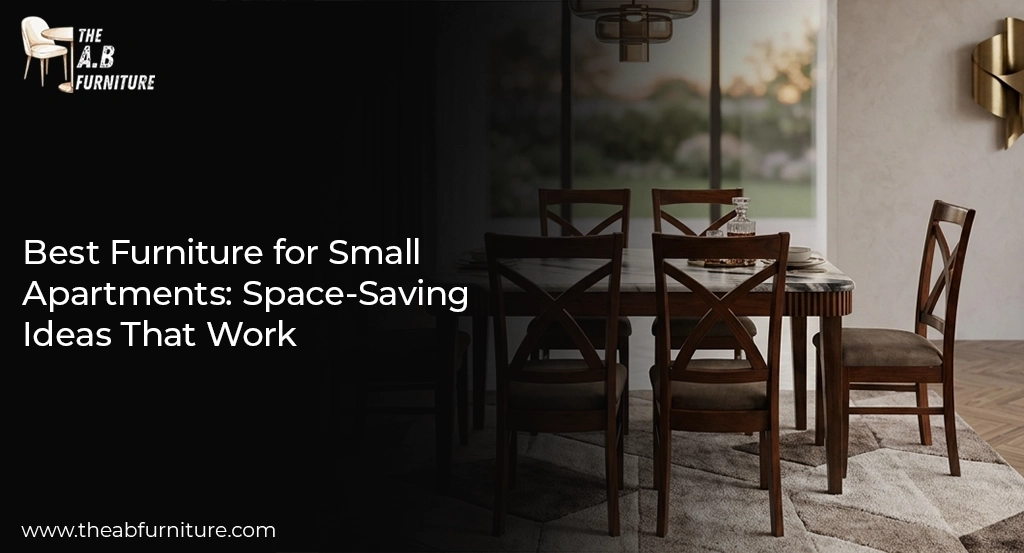
A full-size dining table may be unnecessary if you normally eat alone, as a couple, or with a small family.
An extendable table gives you flexibility. It can remain compact during everyday use and expand when guests arrive.
Another option is a drop-leaf or wall-mounted dining table. These designs can be folded down or reduced when they are not needed, making them suitable for apartments where the dining and living areas share the same space.
When floor space is limited, look upward.
Tall bookcases, narrow shelving units, wall-mounted shelves, and vertical cabinets allow you to increase storage without taking up a large amount of floor area.
Vertical storage can also make a room feel more organized because books, decorative items, kitchenware, and everyday belongings have designated places.
However, avoid filling every wall with shelves. Keeping some open wall space helps maintain a lighter and less crowded appearance.
Working from home can be difficult when your apartment does not have a dedicated office. A wall-mounted or folding desk can solve this problem without permanently taking over the room.
You can use it as a workspace during the day and fold it away when your work is finished.
For renters, a compact freestanding desk may be a better choice if wall installation is restricted. The main objective is to create a functional workspace that does not interfere with the rest of the apartment.
Nesting tables are another smart option for compact living rooms. Several smaller tables can fit underneath one another when you need to save space.
When guests arrive, you can separate them and use the additional surfaces around the room.
This is often more practical than buying one large coffee table that permanently occupies a significant portion of the floor.
Furniture design can affect how spacious a room looks.
Pieces with exposed legs allow more of the floor to remain visible, which can create a lighter visual appearance. Sofas, chairs, beds, and cabinets that sit directly on the floor can sometimes make a compact room appear heavier.
A raised sofa or cabinet does not magically increase your floor area, but the visible floor underneath can make the room feel more open.
Modular furniture is useful when your needs change frequently. Modular sofas, shelving systems, and storage units can often be rearranged according to the room or occasion.
For example, a modular sofa can be separated into individual seating pieces when you need more flexibility. Modular shelving can also be rearranged as your storage requirements change.
This adaptability can be especially valuable for renters or people who expect to move to another apartment in the future.
Before purchasing furniture for small apartments, think about how you actually use your home.
Start by measuring the available space rather than relying on estimates. Remember to measure doorways, elevators, staircases, and other access points if you are buying large furniture.
Next, identify the biggest problem in the room. Is it storage? Sleeping space? Working space? Dining space? Once you know the problem, look for furniture that solves it.
For example, if storage is your biggest concern, a storage bed or ottoman may be more useful than another decorative cabinet. If you work remotely, a folding desk could provide more value than a larger coffee table.
Most importantly, do not buy multifunctional furniture simply because it looks clever. Every function should be genuinely useful. Complex mechanisms that are difficult to operate may eventually become inconvenient rather than helpful.
One of the biggest mistakes is choosing furniture based only on appearance. A beautiful oversized sofa can quickly make a small living room uncomfortable.
Another common mistake is ignoring clearance space. Furniture needs room around it for people to walk, doors to open, drawers to slide, and convertible mechanisms to operate.
It is also easy to overfill a small apartment with storage furniture. While storage is important, too many cabinets and shelves can make the room feel closed in.
Instead, focus on a few high-value pieces that combine functionality with an appropriate size.
Small-space furniture does not have to look basic or boring. Modern designs combine practical features with attractive materials, shapes, and finishes.
Light visual profiles, clean lines, hidden storage, and multifunctional designs can help create a home that feels both stylish and practical. Designers also recommend avoiding excessively bulky furniture and using elevated silhouettes and vertical storage to maintain a sense of openness.
The key is balance. You want enough furniture to make your apartment comfortable without allowing every available corner to become occupied.
Choosing the best furniture for small apartments is really about making every piece earn its space. A sofa bed can combine seating and sleeping, a storage ottoman can provide seating and hidden storage, and a lift-top coffee table can become a practical workspace.
The most effective approach is to measure first, understand your daily needs, and prioritize furniture that performs multiple useful functions. You do not need to sacrifice comfort or personality simply because your apartment is compact.
With thoughtful furniture choices and a little planning, even a small apartment can feel spacious, organized, functional, and genuinely like home.