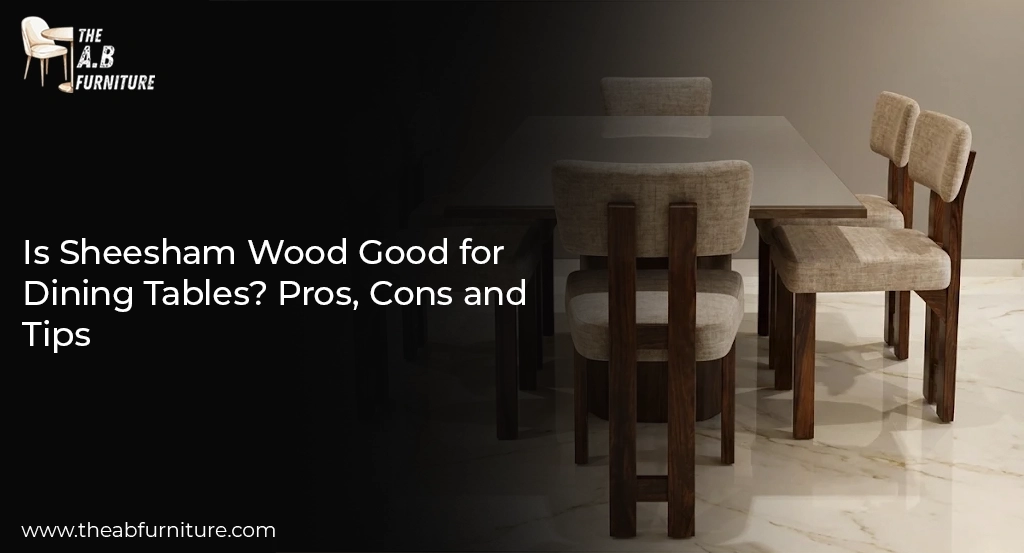

Walk through any furniture market in Karachi or Lahore and you’ll hear the same sales line: “pure sheesham.” Shopkeepers say it with confidence, and buyers nod, but few people know what it actually means or whether it’s the right wood for a table that gets used three times a day.
This guide gives you a straight answer. You’ll learn what sheesham is, where it shines, where it falls short, what it costs, how to spot the real thing and how to keep it looking good for decades. If you’re comparing every dining table design you can find, it should make the decision much easier.
Sheesham, or Dalbergia sissoo, is often called North Indian rosewood. It grows widely across the Indian subcontinent, including Pakistan, and ranks among the region’s most popular furniture hardwoods. It’s dense, at roughly 770 kg per cubic metre, and its Janka hardness of about 1,660 lbf puts it well above mango wood at around 1,070 lbf. The colour runs from golden to deep brown, with darker streaks through the grain. The deep-coloured heartwood is the part prized for furniture, while the paler sapwood is softer and less durable, so good makers build tabletops from heartwood.
Sheesham wood furniture in Pakistan has a long tradition for good reasons. The tree is grown locally, skilled carpenters know it well and it takes carving, inlay and polish beautifully. You’ll find it in beds, wardrobes, doors and above all dining tables, where strength and appearance both matter. Buyers also like that a well-made piece can be repolished and passed down, instead of replaced after a few years like cheaper engineered furniture.
For most homes, yes. A dining table takes more punishment than almost any other piece. It faces hot dishes, spilled tea, scraping chairs, homework sessions and heavy platters at family gatherings. Sheesham’s hardness helps it resist dents and scratches, and its natural oils give some protection against moisture and insects. Add its rich grain, which tends to look better as it ages, and you have a table that suits both everyday meals and formal occasions.
It isn’t perfect, though. The best results come from solid, properly seasoned wood, a good finish and sensible care. A thick top also stays flatter than a thin one, so ask about the thickness of the top and the joinery underneath.
Prices depend on size, construction and finish, so treat these as late-2026 ballparks. Karachi guides put a six-seater dining table at roughly Rs. 75,000 to Rs. 150,000 and a complete six-seater set at roughly Rs. 135,000 to Rs. 250,000, with premium solid-wood sets from Rs. 250,000 up to Rs. 400,000 and beyond. Local listings show four-chair sheesham sets from around Rs. 85,000, six-chair sets from about Rs. 125,000 and ornate inlay sets for eight people above Rs. 400,000.
Several things move the price:
If you’re comparing options, check the current dining table price in Pakistan across different materials and styles before you decide. Always ask whether the quote covers the table alone or the full set, and whether delivery and assembly are included, since a heavy solid-wood table can cost extra to move.
Fake or mixed wood is common, so check the details:
Ask the maker to confirm the table is solid sheesham, not just a veneer top. A reliable seller will explain the construction.
Good care is simple and makes a huge difference.
Dust with a soft dry cloth and wipe spills immediately so liquid doesn’t soak in. Use coasters under glasses and trivets or mats under hot dishes.
Wipe with a barely damp soft cloth, then dry the surface straight away. Avoid bleach, ammonia, abrasive pads and silicone-based polishes, which can dull or damage the finish.
Apply a good furniture wax or wood-conditioning oil once or twice a year to restore the natural lustre.
Keep the table out of strong direct sunlight, which fades the colour, and away from air-conditioner vents and heaters. Extreme dryness or humidity can cause the wood to move. In humid areas, check regularly for signs of insects.
Don’t leave wet glasses on the surface, set hot pots straight on the wood or drag chairs across it without felt pads. Skip harsh cleaners and don’t leave the table in full sun all day. Small habits like these prevent most of the damage people blame on the wood.
Wood choice matters, but shape and size matter just as much. A round table suits a smaller room, a rectangular table fits a long dining area and an oval top softens a tight space. Chairs matter too, since upholstered seats add comfort for long meals. For ideas on shapes, finishes and chairs, browse our guide to Top Dining Room Table Designs. Offices and boardrooms have different needs, such as larger tops and sturdy bases, and a Corporate Dining Table can seat a team comfortably.
Sheesham is a strong, attractive and long-lasting choice for a dining table, and its reputation in Pakistan is well earned. It handles heavy daily use, takes a polish beautifully and can last for decades when it’s well made and well cared for. It also has real drawbacks. It’s heavy and costs more than softer woods, and it needs a decent finish and some attention to humidity and care.
The smartest way to buy is to focus on the details that decide quality. Make sure the table is genuinely solid sheesham and not a veneer disguised as the real thing. Check the construction, the joints and the finish carefully, and ask how the wood was seasoned. Decide whether you need a full set or just a table, and compare quotes on a like-for-like basis rather than chasing the lowest number.
Once it’s home, a little care goes a long way. Always use coasters, wipe spills promptly, oil it once or twice a year and keep it away from direct sunlight and vents.
Think of it as furniture you’ll live with for a generation rather than a few years, because that is how long a good sheesham table can last.
If sheesham doesn’t suit your budget or style, other solid woods and well-made modern designs are worth considering too. The best table is the one that fits your space, your family and your budget, and that you’ll enjoy using for many years.
Tell us your room size, seating needs and budget, and we’ll help you choose a table or have one made to measure. Explore every dining table design in our collection to see what suits your home.
What are the disadvantages of Sheesham wood furniture?
Sheesham is heavy, costs more than softer woods and has only moderate moisture resistance. Poorly seasoned wood or sudden humidity changes can cause cracks or warping, colour varies between boards and it needs occasional oiling.
How long does a Sheesham wood dining table last?
A well-made solid sheesham table commonly lasts 15 to 30 years, and often longer with good care. Quality of construction, finish and maintenance make the biggest difference.
How can you identify genuine Sheesham wood?
Check that it feels heavy, shows irregular natural grain with darker streaks and has slight colour variation. Solid wood shows continuous grain at the edges, while veneer shows a thin layer. The finish should look natural, not like plastic.
How do you clean and maintain a Sheesham wood dining table?
Dust with a soft cloth, wipe spills at once and clean with a barely damp cloth, then dry it. Use coasters and trivets, avoid harsh chemicals and apply wax or oil once or twice a year. Keep it away from direct sun and air-conditioner vents.