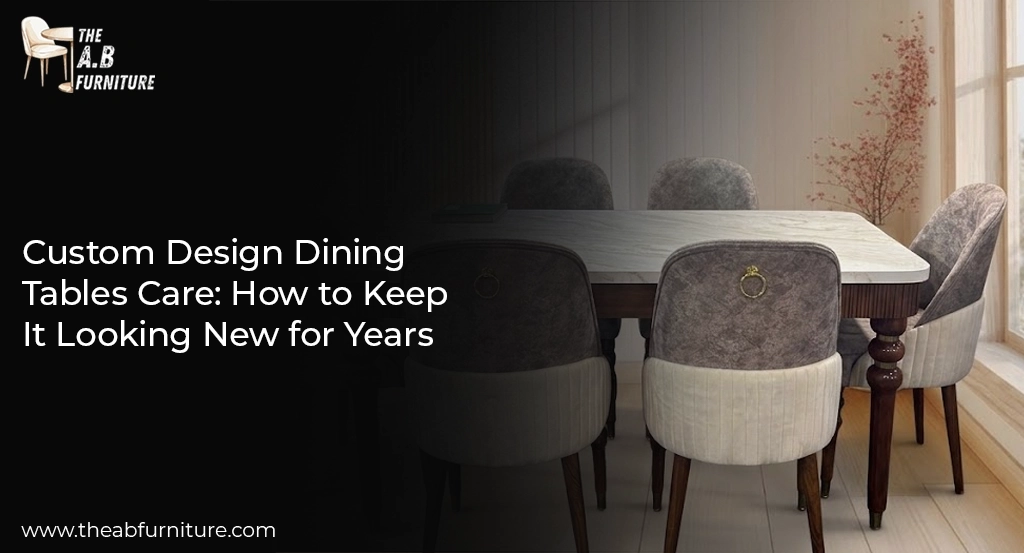

Custom design dining tables are built to last for decades. Daily life puts that promise to the test. Juice spills. Hot pots land on the top. Afternoon sun creeps across the tabletop. Without a little care that fresh look fades faster than you’d expect.
Good news first. Looking after your piece doesn’t need fancy products or hours of free time. A few simple habits do most of the work. This guide starts with daily cleaning. Tips for each material follow. Then come everyday dangers such as spills or strong sun.
Showroom furniture is easy to replace. Custom work isn’t that simple. Your table was shaped around your room. Its size fits your family. The look matches your taste. Repairing a damaged top often means a skilled worker visits your home or takes the whole piece away for weeks. Stopping damage early costs far less.
Care also protects the finish. That is the thin coating sitting on top of the material. Scratches land on it first. Splashes hit it next. Sunny afternoons beat down on it daily. Water slips in once the coating wears thin. Stains show up after that. Cracks can arrive later.
Here’s the best part. Five minutes a day plus one slower check each month covers almost everything.
For custom design dining tables a daily wipe works like brushing your teeth. It takes a minute or two. Skipping it causes big problems later.
Start by dusting with a dry microfiber cloth. Dust acts like fine sandpaper once a plate or laptop presses it down. Clearing it every day prevents tiny scratches. Wooden tops prefer wiping along the grain. That simply means the natural lines running through the timber.
Crumbs come next. Sweep them into your palm rather than dragging them across the top. Sticky spots need a lightly damp towel. Pat the area dry straight away. Water left sitting around is the quiet troublemaker behind many dull patches.
Finally get into the habit of using placemats. Coasters matter just as much. Pick ones with a felt or cork back. Rubber backing can stick to some finishes then leave marks behind.
Give the whole top a proper wipe every seven days. Stir a few drops of mild dish soap into a bowl of warm water. Dip a soft cloth then wring it out until it feels barely damp. Use long even strokes. Follow with a second pass using a fresh cloth rinsed in plain water. Finish with a clean towel.
Test any new cleaner on a hidden spot first. The underside of the top or the back of a leg works well. Wait a few minutes. The product is safe when that spot looks the same afterward.
Skip anything harsh. Bleach can eat into a finish. Scrubbing pads leave fine scratches. Steam cleaners push heat deep into the joints. Even window spray can cloud a wooden top. Plain soapy water beats them all.
Most custom design dining tables rely on a handful of materials. Each has its own quirks. Here is what works for every one of them.
Few materials react to their surroundings as much as wood does. That makes a custom wood dining table a bit needy. Water soaks in. Damp weather makes it swell a little. Dry air makes it shrink. Use the barest hint of moisture when wiping. Dry wet patches quickly. Add oil or wax only as often as the maker suggests. Too much product leaves a sticky film that attracts dust.
Looks can fool you here. Marble is softer than most people expect. That matters if you own a luxury marble dining table set. Acid is the main enemy. Lemon juice can leave dull marks. Wine does the same. So do cleaners with vinegar. Wipe spills straight away with plain water or a gentle soap made for stone. Check with the maker about how often the protective seal needs renewing. Every year or two is common.
Fingerprints appear fast on glass. Bring the shine back with a soft cloth plus a little glass cleaner. Spray the cleaner onto the cloth rather than the glass so liquid can’t seep under the edges. Lift heavy items instead of sliding them. Edges chip easily so keep chairs from bumping them.
Frames made of metal stay smooth with a quick rub from a dry towel. Damp spots can bring rust to iron or steel. Wipe any splash away right then. Gold coated parts want gentle treatment only. Rough pads can scratch the coating off.
Spills happen at every dinner. What counts is how fast you react. Press a clean cloth onto the liquid. Blot instead of rubbing. Rubbing pushes the mess deeper then spreads it wider.
Greasy food needs a different move. Dab the spot using one tiny drop of dish soap on a damp towel. Rinse with a clean damp one. Dry it well.
Candle wax takes patience. Let it harden first. Lift it off gently with a plastic card. A metal knife would gouge the top.
Stubborn stains deserve a call to the maker or a repair expert. Scrubbing harder usually makes things worse.
Heat leaves white rings or burn marks that no quick wipe can fix. Slide a thick mat under every hot pot. Treat serving dishes fresh from the oven the same way. Electric cookers or kettles belong on a mat too. Even a mug of tea can leave a ring if it sits long enough.
Cold glasses cause trouble as well. Droplets gather underneath then soak into the finish. Coasters cost very little. Fixing a ring costs far more.
Scratches usually come from small things. Think of a vase dragged an inch. Picture a fork dropped from a toddler’s hand. Imagine a laptop pushed across the tabletop. Stick soft felt pads under vases or bowls. Anything with a rough base needs one too. Lift items instead of sliding them.
Kids need a thick pad before homework or craft time. Hard pens can press dents into softer finishes. Pets can leave marks as well so trim their nails often.
Chair legs bump the table edge more often than you’d guess. Felt pads on every foot soften those hits.
Sunlight is a slow thief. Custom design dining tables placed beside a window take the worst of it. The finish fades a little each day. Wood can turn lighter or darker in patches. Move the piece a few feet back when you can. Curtains or blinds help during the strongest hours. Shift decor pieces from time to time so no single spot takes all the glare. A light tablecloth on very bright days also works wonders.
Heaters sitting close to the table cause trouble. Keep a few feet between the two. An air conditioner blowing straight onto the top can dry it out. Wood hates sudden swings. Constant changes can open small cracks or loosen joints. Aim for steady comfortable air all year. Dry months call for a humidifier. Rainy weeks call for a dehumidifier.
Polish brings back that brand new glow. Timing depends on the finish. Oiled wood usually wants a light coat about twice a year. Hard glossy finishes need far less. The maker can tell you which one you have before you buy any product.
Apply a thin layer with a soft cloth. Rub in small circles. Let it rest for the time printed on the label. Buff with a clean dry cloth until it shines. Too much product turns sticky so less is more.
Deep scratches or worn patches call for a professional. Renewing a top costs far less than buying a new table.
Wobbly furniture puts extra stress on the top. Rock the table gently by hand every few months. Tighten loose screws with the right tool. Never force them. Extension leaves should slide smoothly with a second person helping. Brush dust out of the tracks with a dry brush. Ask guests to use chairs instead of sitting on the edge.
Rearranging a room or changing homes puts a table at risk. Never drag it. Get a helper then lift the whole piece clear of the floor. Take off extension leaves or glass tops first. Wrap the top in a soft blanket. Plastic wrap traps moisture so keep it away from wood. Move chairs separately.
Caring for custom wood dining table comes down to small habits repeated often. Clean the top daily. Block harsh sun. Use mats under hot dishes. React fast to spills. Follow these steps for years to come. Minutes spent today beat a costly repair tomorrow.
Share these habits with everyone at home so the whole family helps. Thinking about a new piece? Choose a material that matches your daily routine. Then enjoy every meal around it.
Dust with a dry cloth every day. Give the top a gentle soapy wipe once a week. Always dry it afterward so water never sits on the finish.
Mild dish soap mixed into warm water suits most finishes. Keep the cloth barely damp. Skip bleach. Stay away from ammonia or window spray too. Test any new product on a hidden spot first.
Fresh marks sometimes fade after gentle buffing with a dry towel. Older rings are tougher. Please don’t scrub or reach for harsh products since they can strip the finish. The maker or a furniture repair expert can suggest the right fix.
It’s best not to. Marble handles warmth better than wood but sudden heat can still leave marks. Thick mats cost little. They keep the marble safe.
Place it away from bright windows if you can. Close curtains or blinds during strong sun hours. A light tablecloth on bright days also helps.